GHR Honda Team Site & Blog
Posts tagged People and places

Day 13: Post race interview with Jacob Smith
Jan 18th

"We really, really made it!"
I managed to get to speak to Jacob on the evening of 16.1.2011 as they started their celebrations, but not before what turned out to be a prank call of sorts. It was good to see the boys had finally let their hair down after nearly a month of early starts and long days.
Ed: The beers are out already I see…
JS: Yeah, we’ve had a couple! Sorry about that… Max was just pretending to be me!
Ed: I had somewhat of a restless night last night and got up again to watch the timings for the last special. You had me more than a little worried – after entering the stage in the top 20, you disappeared completely from the time sheets for about an hour. What happened?
JS: Mate, I ran wide on a turn that was sharper than I was expecting, through a culvert and then I hit a fence. It pushed the bash plate that had all my tools in it upwards, punching a hole through the bottom of the radiator. I spent a lot of time fixing it. It took a couple of tries because it was a fairly big hole. I had some liquid steel but that wouldn’t plug it. I had to find a stick about the same diameter of the hole to plug it and then filled the rest with “knead-it”. That fixed it and I got going again. I was freaking out big time, I thought my race was over. I was really dirty on myself. I was busy adding up (the road book) and the corner came up way faster than I planned for. Next thing I knew I was in a fence with the radiator pouring water. I was saying to myself before the start, “just take it easy”, because I had nothing at all to gain by going harder. I couldn’t believe it happened right at the end.
Ed: What were we talking about just 24 hours ago? The two guys who crashed out last year!
JS: Yeah! On the last day and all! I felt like an absolute idiot, but I managed to fix it and get in. It was such a relief to get to the finish, to end up in Buenos Aires and hand my time card in… a relief more than anything to tell you the truth.
Ed: Well, at least you did it under your own power. Lopez ended up being towed to the end after he trashed the rear end of his bike and that cost him 3rd place overall. He had a whole lot more to lose though.
JS: For sure. After all the dramas we had, all I wanted to do was finish. But if I was running for the podium and had my spot cemented in place after 16 days only to have something like that go wrong I’d be gutted, massively gutted. I feel for him definitely, but mate, that’s what can happen. It was the last stage and only 180km, but it’s still counts. It could happen on the first day, day 5, day 10, whatever. You have to stay 100% focused, all the way to the end. It’s not over until it’s over. We had an hour and a half before the start of the stage and I was there with Jonah and Quinn Cody. We were all talking about cruising it in because there was nothing to gain, just about home and hosed. Then I find myself 6km into the stage on my hands and knees with the radiator leaking. I just thought “this cannot be happening”. Anyway, it all worked out in the end.
Ed: So are you going to carry an assortment of sticks in the spares kit from now on?
JS: (Laughs…) I dunno mate! We learned a lot this year and we’ll be in a much better shape for next year with all this under our belts. This is an example of one of those things that can happen. I put it down to experience. You can think you know everything but you never, ever stop learning. I got away with it this time, but what happened will stick in my mind for a lot of years to come, I can tell you!
Ed: Well I think you deserve to feel very proud of what you have done, and you deserve at least a couple of beers to celebrate.
JS: It’s been amazing. I was thinking about it on the way here tonight. It’s pretty much a mission accomplished. I wanted to make the finish and get a result. I’m not rapt with 32nd, but we made it to the end. For our first year, we’ve achieved what we needed to do. We know what we need to change.
Ed: I was chatting to Glenn earlier in the day and I pointed out to him that only 94 of the original 186 bikes made it to the end. You’re still essentially in the top third of the half that finished. No mean feat when so many don’t succeed in their first attempt at Dakar. While it’s really sad that Mark and Warren didn’t make it all the way, neither of them sound like it got the better of them. The work now in front of you all is to build the team finances for next year and to do it bigger again. The support that has come from the Australian community and from some places overseas suggests that it’s more than just possible.
JS: It’s very promising. Just the support that I received personally from Australia has been overwhelming. I never knew that many people would follow it. But the website traffic has shown just how many do. We had over 20,000 hits on the site. Right now, I’m very keen to come back. Halfway through at the rest day I was struggling. This has been the toughest thing I have ever done, no doubt there. But none of the troubles we hit have deterred me. We need to get the sponsorship and get to work early. We have so much more knowledge now than when we first arrived. We need to put what we have learned into place quickly to capitalise on it.
Ed: Thinking about that issue with the fuel tanks. That was a left turn in the design process fairly late in in proceedings. The team were working on a completely different tank arrangement but you ended up with what you had just because of time in the end. That one problem with the tanks was the single biggest contributor to the bad luck you all experienced as a team. It was a relatively simple, non-moving part but it’s something you know how to do differently.
JS: Absolutely. The only things that gave us trouble were the untested parts. The tanks and the map reader brackets were the only things we had drama with and both are a relatively easy fix, although not when you are over here losing time every day. We’re much better off for the experience now. Everything that we had tested was absolutely fine. The engines were amazing and the rest of the setup was just as solid. There is so much potential with these bikes.
Ed: The wash-up from this year, being the first with the “450 rule” will be a fascinating thing to watch. The engine was definitely the least of your worries. For other riders as prolific as David Casteu that certainly was not the case. In the end, everyone lost count of how many engines he went through and it must have been so demoralising having to pull the bike apart in the desert to select first gear and ride home that way. Even Despres had a scare with his engine making sinister noises part way through one stage. Simon Pavey’s bike was probably the most dynamic grenade with the “leg out of bed”. For top level teams these sorts of problems are disastrous, but if the organisers stick with the rule they’ll have to deal with it. Blown engines don’t just cost time, they can cost you the finish.
JS: I know we had a lot of trouble, but none of them prevented any of us riding. The changes required to make the whole package come together are minor. We don’t have to do any more testing on engines. A redesign of the tanks and a couple of weeks to ride would see that sorted out. We can take a huge amount of confidence from this. It’s just the beginning.
Ed: Well, I should leave you to your celebrations. I know it’s going to be a busy few days up ahead but please make sure that Glenn has a beer too.
JS: I’ll try, but Glenn’s just about toasted. He’s been going so hard for weeks, but I think he’ll relax with us tomorrow night. It’s been fantastic to sit down and have dinner as a team tonight, knowing that we don’t have to rush to get up at 4.30 in the morning. We’ve done 16 days of that. We’re all ready for a break.

"Hey Simon, wake up! We're finished!"

Jacob and Arja in parc ferme, the morning of the ceremonial finish.

Jake tidying up...

"We made it!"

The morning of the ceremonial finish. You'd think that after all this time Jake would be reluctant to get back on the bike!

Just about to ride over the podium for the ceremonial finish.

Smiles all round. The rider couldn't make it without the mechanics.

L-R: Simon Wade, Jake Young and Max Sullivan.
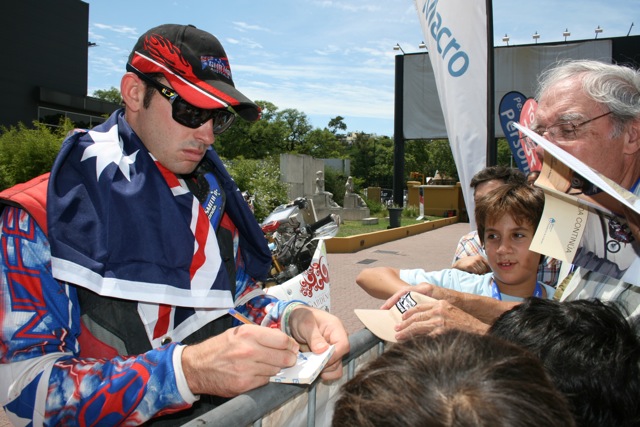
Jake was mobbed by spectators wanting autographs.

A smiling Mark Davidson and a local trying out a rather expensive souvenir.

Some of the GHR crew, a bottle of Bundy, Harry Suzuki and Bruce Garland's mechanics. That's Jake Young asleep at the end.

The GHR truck going to collect wheels and spares from the Malles Motos depot. This puts in perspective how people like Simon Pavey do Dakar. They have a single chest of spares and some tyres carted to bivouac every night.

The work begins again. Everything needs to be cleaned before going to customs. Hard to do in the pouring rain!
We’ll bring you some more updates as the team packs up and comes home.
Ed.

Day 10: Copiapo > Chilecito
Jan 13th
“Absolute madness…”
These were the first words of the very weary Glenn when called me at 1.30am his time having just battled through a 14 hour drive across the mountains. This was no leisurely cruise. The competitors and support crews all crossed the Andes for the second time today.
Most of the day consisted of tiny dirt and bitumen tracks, many of which had considerable drop offs and either negligible or no fencing. The truck loses the clutch above 3,000m and there were 140km of transport above 4,000m where just breathing becomes difficult. At times the progress was limited to 1st and 2nd gear because this was the most the truck would pull. Large sections of the dirt looked like a competitive stage rather than a convoy route with talc-like dust to knee height and ruts deep enough to trap the trucks. Some of the competitors vehicles were getting stuck in the transport, so you can imagine what it was like for the service vehicles in regular road going vehicles!
The pictures tell the story. There were cars and trucks stuck everywhere and one strayed into a ditch, ending up on its side. At the time Glenn called there were still some competitors yet to arrive.

On the way up...

A Dakar with snow? This is serious altitude!

Just remember this is a transport stage...

Still time to do some sight seeing. Well actually, any excuse to get out of the truck is valid on a 14 hour trip.

Bitumen and lines. Welcome, safe monotony.

And this is why. Remember, this is a transport stage!

It ended badly for this support crew.
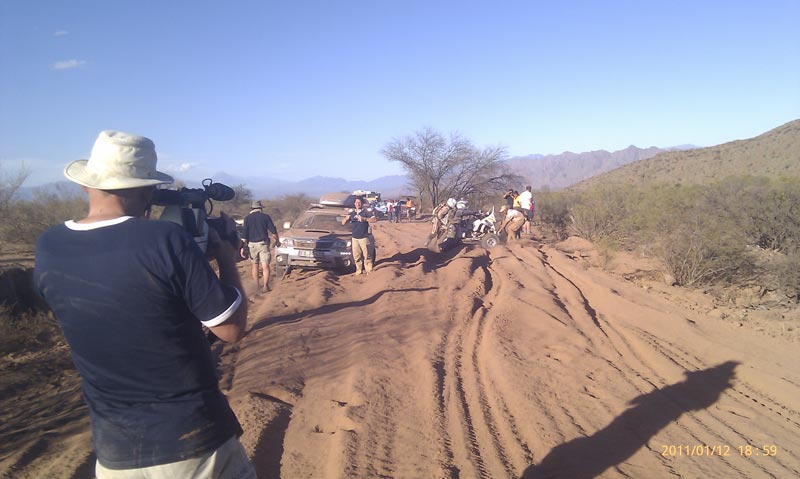
Carnage!

Glenn has a heap of video we should be able to get up on the site once he's back.
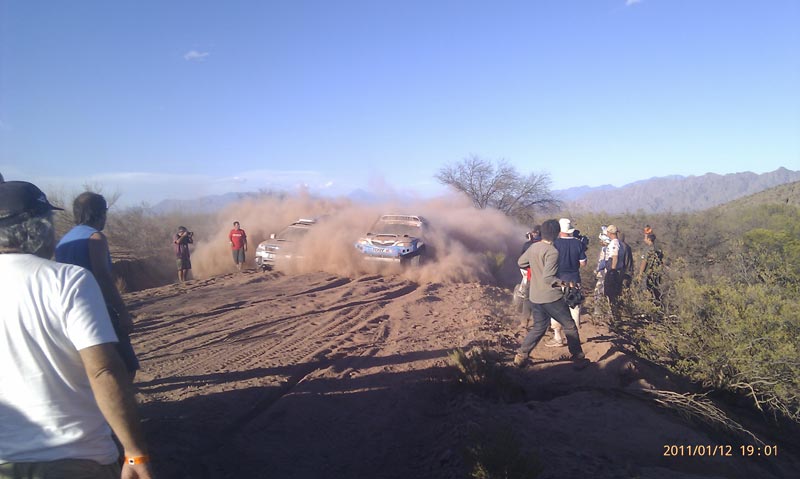
Remember, this is not a special stage!

Starting to get dark now... Sleeping in a rolled camper next to this? No thanks!
Jacob Smith finished 19th for the day but he did have a major crash. He has damaged his shoulder and rearranged the navigation equipment, but he’ll be starting on a straightened machine tomorrow. At present the penalty accrued on Day 9 still stands. While the team are still campaigning for its reduction they are fairly sure there will still be something imposed. He stands in 39th place, but were the penalty be completely revoked he would return to 26th place overall.
Tomorrow is a massive day for the riders as they undertake a 164km liaison before the 622km special to San-Juan. The special will include one relentless ascent to over 3,000m before dropping more than 2,000m in less than 100km of racing. If today didn’t really test the field, tomorrow will. Jake will get to start in a reasonable position. Now we wait to see who emerges at the end…

Pics: Days 8 & 9
Jan 12th
Some pictures in from the crew covering the last 48 hours.
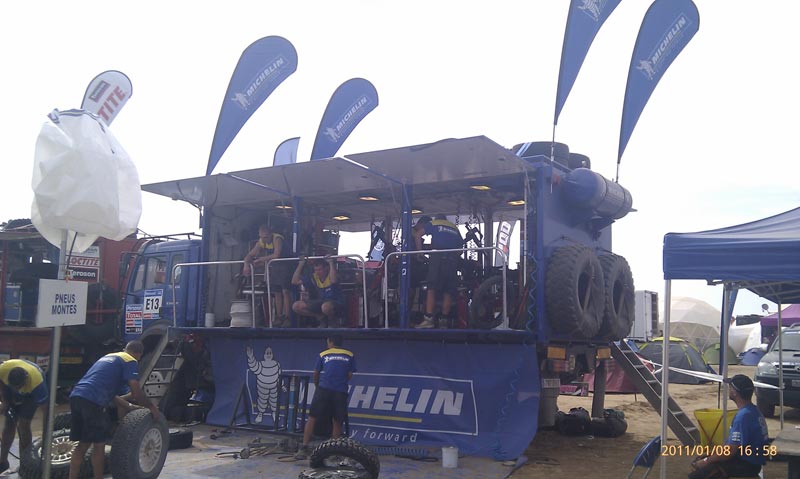
Tiring work!

Mark Davidson and Jake Smith playing tourist.

GHR clowns...

Clear skies and mountains are a recurrent theme here in Chile.

Another Pacific sunset.

It's hard to guess which way is up with this carcass!
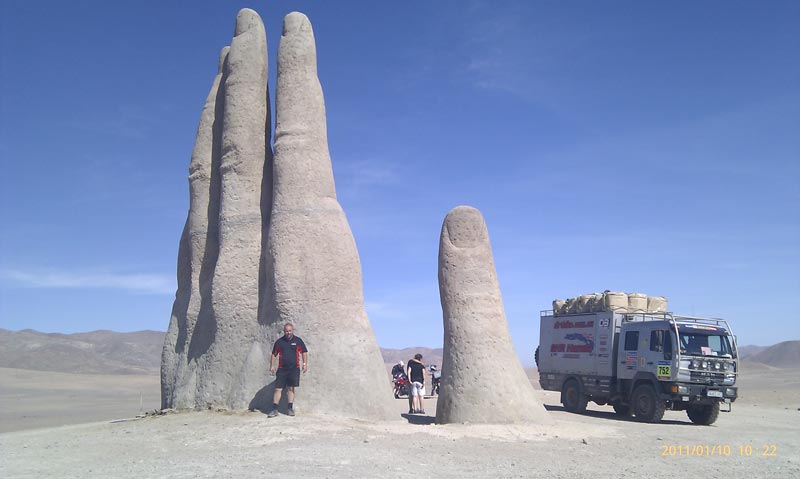
Simon and the The 11 metre tall Mano del Desertio in the Atacama Desert.

Mark Miller's Touareg in service.

The spaceframe construction on these means the rear metalwork under the body is solely for storage.

Seriously tough front end construction on these though!

Race seat removed from #304.
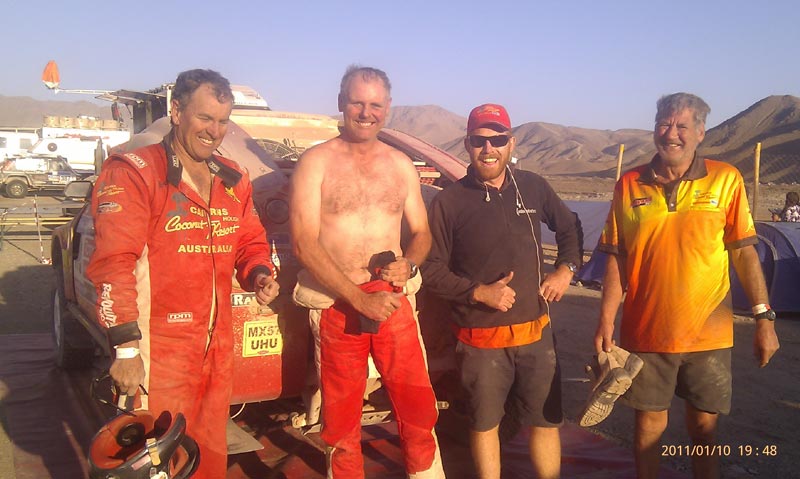
More Aussies!

More sky and more mountains!

First wave of the mass start on Day 9.

They're off! The first 10.

Jake Smith right in centre of shot as he launches off into the desert.

The second wave disappear into the Atacama wilds.

Jake on some of the mining roads mid stage.

More spectators out in the Atacama.

Nalu's Luke McNee gets the shot!

Luke back at work...

These guys have a seriously fun job chasing the field from the air.
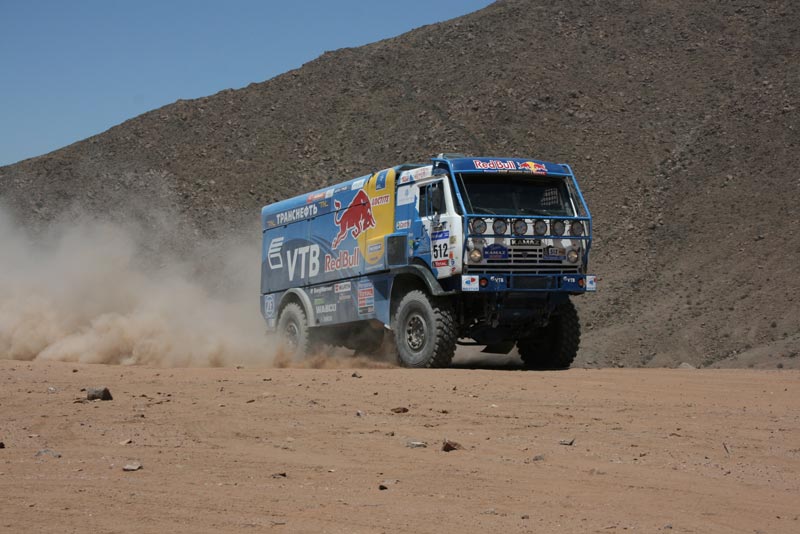
Eduard Nikolaev flies past in his Red Bull Kamaz. The trucks were last out into the stage.

Pics: Arica and surrounds
Jan 10th

#169 Bultaco. You'd think that after exisiting for 40 years, it could last just another couple of weeks... It was not to be, but he did make it half way.

Heading north, L-R: Jake Young, Simon Wade and Max Sullivan

Luke McNee of Nalu Productions. No, we didn't spring him on the throne. He's in an internet cafe booth.
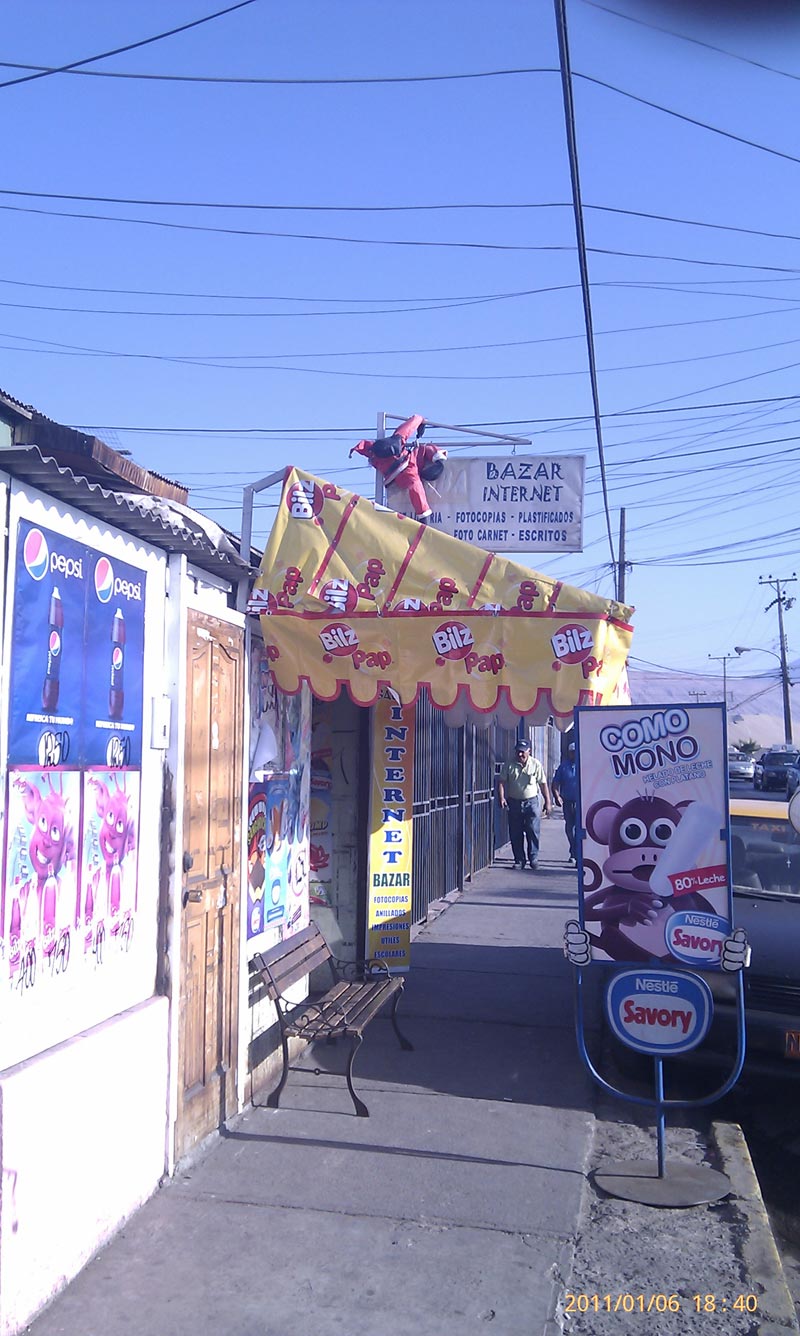
Internet cafe, the connection to the world!

Checking in for dinner at bivouac.

Geoff Olholm and Steve Riley after a horror day.

Steve Riley.

Scenes like this all the way to Arica...
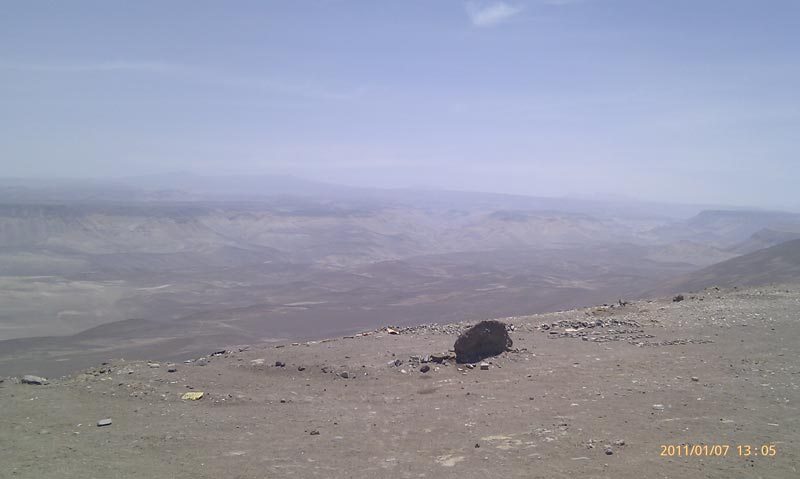
and this...

and this...

and this...

Local police.

Up the top of the mountains.

Max and Jake treated like celebrities everywhere.

Simon gets a kiss!

Some of the locals let into the GHR transporter.

Jake Young.

The servos in Chile get right into the Dakar spirit!

Arica at the bivouac.

Connie and Marcel. Total strangers taken off the street to help Glenn navigate around town. Now GHR friends.
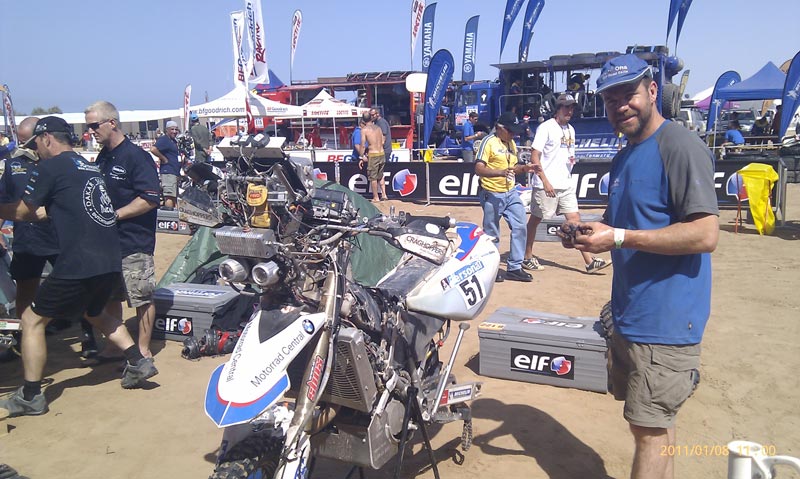
Simon Pavey going strong, currently third in Marathon class. No mechanic!

Luke in the Nalu edit suite. No expense spared!

Simon and Max getting Jake's bike ready for Day 7.

BMW camp side-on.

BMW camp from the other side.

Glenn Brown, Vern Strange, Brad Strange, Warren Strange and Arja back in Arica and packing for the trip home.

What is it with paramedics and scissors? Warren's jacket chopped up.

Pics: The tale of the Arica window washer
Jan 10th

"This didn't go to plan..."
In spite of Glenn’s insistence that he didn’t want the windscreen washed, this guy in Arica jumped on the truck (no small feat) and started to lather it up anyway. Sitting at the front of the lights when they changed to green, Glenn didn’t have much option but to hook first and drive through the intersection because of the traffic behind. The look on the guy’s face says it all; “this didn’t go to plan”. The spontaneous ride continued for about a block and a half until Glenn pulled over. Washer-man then asked Glenn for money, but Glenn insisted that he was the one due payment since he’d given the kind man a ride.
The perennial Dakar crowd watched the whole thing in laughter.

Interview: Mark Davidson on the rest day
Jan 10th

A man with a plan, Mark Davidson...
Ed: Hi Mark… been taking it easy on your day off?
MD: I’ve had two days off, what are you talking about? (laughs…)
Ed: It’s nice to see you’re still over there and living it up in spite of being out of the race, and I like the picture of you holding up the Panadeine Forte! How are you feeling with all your battered bits and pieces?
MD: I’m actually pretty happy. I did my best. I was 101st in the field and doing better than I thought I would. But I never, ever thought that I’d suffer so much with altitude sickness. It just wrecked me completely. It took me nine hours to ride the 500km transport, and two hours of that was way up the top. I could only ride at about 50 kph and I needed three stops for oxygen, one of those being in the hospital. I passed out twice and vomited in my helmet… it really knocked me around.
It took me so long to get over the mountains that I was late for the start of the special stage. I was due to start at 12.37 pm, but in reality I didn’t get there until 4.15 pm. By that stage all the bikes and all the cars had left. The bloke at the control point wasn’t going to let me start because he said I was the last bike… but then another bike did turn up. We argued about it, and he spent some time on the radio with someone else speaking french – I didn’t understand what they discussed. At the end of it he came over and said, “very well, you may start in 20 minutes, five minutes before the trucks”. I told him I didn’t want to wait and his response was essentially that I had that one option, or I was finished for the Dakar.
Faced with no other choice I started five minutes before the big Red Bull monster trucks and the all others. It was a fairly windy day. I lasted 120km, and cleared off the track when they pushed the sentinel button to tell me they were going to pass – except not all of them used it. I moved off the track for one truck thinking I was up-wind, but I’d picked the wrong side. The truck passed and I was swallowed in a cloud of dust. Before I could stop I hit a rock and that was it. I went over the handlebars in third gear and wrecked all the navigation gear.
I managed to get up but I hurt and had no strength. I had a fair idea what I had done, but managed to ride the rest of the stage and entered the bivouac at about 8.00 pm. I went straight to the medical tent and an x-ray confirmed that I had broken ribs. Glenn asked me what I wanted to do and I told him I wanted to battle on. I went off to tidy myself up and then he came over to me with the bike and tipped it on its side. He wanted me to pick it up, but I told him I didn’t think I could because I struggled earlier in the day and the pain was worse now. Glenn said, “well you’re going to need to do that five or six times tomorrow and every day for the next ten days… what do you think?”. We arrived at the inevitable conclusion…

Mark's damaged bike being loaded back into the mothership.
I guess the thing that most disappoints me is that I had no idea that the altitude was going to be such a problem. There really wasn’t anything in the disclosure material for Dakar covering how serious it was. It effected many, many people and I think the older you are, the worse it is.
Ed: It’s a cruel irony to have your Dakar effectively ended by a transport stage rather than running out of puff in the desert.
MD: Oh, look… I made mistakes, sure. Yes, I crashed in the stage, but I did also finish the stage. Would I have crashed otherwise if I was the 101st bike in? Probably I would have been fine, but that’s the event mate! There are all sorts of obstacles that you never think about. Would it have been something else a day later? I can’t say!
Ed: When we spoke just before you left Australia, you said you thought you were as prepared as one could be. Is there anything you would have done differently?
MD: Two things. I knew that we’d be well over 4,000m altitude, but I didn’t appreciate that we’d be there or above for 200km, for two or three hours. I’d never experienced 4,800m before, so I should have considered that more. Subsequently, I asked one of the medicos what other people do. I was surprised to learn that many riders bring their own oxygen – like the small tanks that elderly people carry. I was surprised, but I now know it’s essential. Am I disappointed? Sure… But I remember that I was running middle of the field for five days and I am very happy about that. I gave it my best shot, you know?
Ed: I was pleased to see that in the early stages you were improving on your start position, not just plodding along.
MD: I was happy with my performance. I’d like to be out there still plodding along, but I’m here.
Ed: You’re staying on with the guys for the duration of the event?
MD: Well, there are only Jake and myself left and he’s the only “runner”. I’m staying on to be Jacob’s “dog’s body”. One of the things that outsiders definitely won’t appreciate here is that the bivouac is so big that it’s hard to find things. You need someone at the front gate to show you where the camp is – it’s different every day and you can easily spent 20 minutes looking for it. Then you need to get your GPS code. Then you need your road book. Then you need to get your start time. Those things aren’t available until 10.00 or 11.00 at night when you want to be in bed if you’re racing. It can take two hours to get these sorted at night when you should be asleep. So I’m going to hang out and try to make things as easy for him as I can.
Ed: So are you considering it homework for next year?
MD: Every day is still a learning experience even though I’m not riding. I’m taking the time to talk to other riders, other mechanics and I am picking up as much as I can. I am sucking the brains out of the GPS guys. It’s an event you really need to learn the ropes for. Jacob is running around 34th in the field (he was on the day) and could easily run in the top ten save for his series of problems. Whether or not they are all his fault is irrelevant, because with more experience many would not have happened.
Ed: That’s the picture I get from everyone in the team. The other thing that everyone has noticed is just how generous the whole Dakar caravan of competitors seem to be with their time.
MD: I was expecting people to have that attitude because I had experienced it before. It’s not the case here at all. There’s no “closed book”, and if they can help you they will. I’m sure that if you were here by yourself, you’d not go without help. We’ve found out some interesting things though. I think that guy making me start just five minutes in front of the trucks is almost criminal. Have you seen those things? I kid you not, they are passing at 180 kph. The are just horrible things to be near and not even Jake could get away from them. It was an irresponsible, bloody-minded, spiteful decision. I guess I made him look silly in front of his colleagues when, having told me I was the last bike, the other one turned up! In Safari we have transport stages that are pretty relaxed. Here, you can’t muck around. You have to break every speed limit and nearly every road rule in the book. Only then would you maybe have ten minutes up your sleeve at the beginning of the special. Jake found that out the hard way when he stopped for fuel and a whizz and with one little wrong turn he got there 20 minutes late. That sort of thing can end a race. I picked up 15 speeding infringements on the first day because I didn’t understand the speed zones. They threw the rule book at me, but I’ve learned that other guys know what they can get away with. That comes with time and experience.
Ed: Sounds like fun, and even with all of that I can tell you’re still smiling.
MD: I’m having the time of my life! It’s an absolute ball! I’m not the dunce, so don’t think that at all. I signed up for Dakar, and I’m going to finish Dakar. Not as a rider, but I’ll finish as a rider’s assistant. I’ve got no regrets. The only drawback is these broken ribs. The bones are completely smashed and I can feel them grinding together.
Ed: No coughing, no sneezing and laughing isn’t much chop.
MD: I can tell you going to the toilet isn’t much fun!
Mark was given the round up by Glenn at this stage. It was 1.00 am and they had to be up around 4.30 am. Time really is short over there and I think everyone is grateful for Mark’s dedication to his new-found role. Everyone expected Day 7 to be big…
Day 6: Iquique > Arica
Jan 9th
“And then there was one…”
Day 6 was yet another tough day. Warren Strange is now officially out of the Dakar and will be heading home shortly.
The stage headed south from Iquique and doubled back on itself to finish in Arica, all the while staying relatively close to the coast. Sand dunes abounded and the riders were forever rising and falling in conditions that made navigation challenging.
Initially, Jacob Smith was making good pace in the special, but his GPS stopped working. He stopped to attempt repairs and lost about half an hour. Jacob’s earlier start and stoppage saw Warren catch up and the pair continued on together to share the navigation duties.
The pair were riding close together when Warren was thrown violently from his bike, seriously damaging his shoulder. There was nothing Jacob could do but wait with him for medical assistance, so wait he did – for about 30 minutes. Warren was air lifted from the stage to Iquique and Jacob soldiered on to the end alone. He came in 50th today, and stands 34th overall. Unfortunately, because the GPS was not working it may be impossible to claim back the time he spent assisting Warren. The guys managed to move Warren from Iquique to Arica so he could be with the main crew for the rest day, but he is booked to fly back to Australia today.
Contrary to some reports suggesting Jake is feeling overwhelmed and down-trodden, he is still fiercely determined to finish the rally. Other than a couple of mistakes that can be attributed to this Dakar being his first, the race so far has been cycle of relatively small issues beyond his control that compound to cause 10 or 15 minute delays each day. While Jake and the team know that he has the pace to run with the top 20 riders, most stages have seen these delays put him down the start order the following day, where the laborious task of passing in dust swallows up opportunities to race hard. As Glenn put it, he’s serving his apprenticeship. Most of the great names in the sport are 10 years his senior and have all taken knocks along their journeys. But at just 22 years of age, Jacob gets up each morning and puts his gear on to do it all again – even if it means that he starts 86th on the stage as he did on Day 5. Not all competitors have willingly accepted the consequences of mechanical problems as was seen in the last stage…
Overall, the team are very happy with the way the bikes have performed. The few problems with them will be easily remedied for next time, but importantly there have been no mechanical failures that stopped any of the riders from proceeding. During the rest day everything will be fully assessed in preparation for the second week’s stages. The only good thing about having just the one rider still in the field is that the service crew can now dedicate all their time to Jake’s machine for the red of the event.
The hope is that with the rest day behind him, Jake can have a bit of a break from the bad luck and start banking some good specials.
The logistics of running the team remain a never ending challenge, but would be so much harder were it not for the friendly locals. Glenn called in at 1.00 am his time, having only finished dinner 20 minutes before. He’d been running around trying to find the motel earlier in the evening using the GPS, and of course, the address was not available on the map. He stopped the first two people he happened upon who turned out to be a couple on holidays from Santiago in Arica. Indicative of the hospitality experienced everywhere in South America, Connie and Marcel jumped in the car with Glenn and took over navigation without hesitation. They seemed to be enjoying the novelty of it all (they were unaware the Dakar was moving through Arica when they planned their holiday) so Glenn encouraged them to wave out the window, knowing full well what the outcome would be. In no time, a crowd had gathered as they seem to do when they see a vehicle associated with the Dakar. In return for their assistance, Glenn took them through the pits and introduced them to the team. They eventually came and ate dinner with Glenn and Jacob too. Total strangers earlier, they have become the “fixers” and interpreters for the team in Arica and everyone will part as friends. Such is the convivial spirit of the Dakar.
I have a heap of photos to sort out, so stay tuned!
More to come soon!

Day 5: Calama > Iquique
Jan 7th
It’s character building…”
Glenn called in again for Day 5. It’s been a very tough day for the riders.
Today’s stage was extraordinary in so many ways. The special started at approximately 3,000m above sea level and headed towards the Pacific. Relatively normal altitudes were only found beyond WP6, and the terrain was a mix of ruts, rocks, dusty gravel and eventually massive sand dunes just overlooking the coastline. Ending the stage was a spectacular 2.3km descent down a near featureless dune into the bivouac. What few features there were would have lead to a dangerous free-fall into the sand below if the competitors didn’t choose their path wisely. All competitors would have found the day challenging and there were a number of riders out with injuries. Warren Strange and Jacob Smith both had falls today but remain in the running.
Due to his frustrating time loss yesterday, Jake started 86th on the stage today and was forced to pass numerous riders in dusty conditions. Time is always lost when dealing with traffic in dust, but he applied pressure right from the beginning and crossed WP1 in 59th. He reached 30th at a couple of points, but finished 43rd for the day. This leaves him 33rd overall, 03:11:07 down on the leader. Although uninjured in his tumble, Jacob has been contending with strength-sapping diarrhoea, making dehydration a concern.
Warren started 49th off the line, and was running as high as 24th fastest on the stage before dropping back to 37th at the end of the special. He now stands 83rd overall, 08:03:27 back from the race leader. He has hurt one knee but is set to push on.
Mark Davidson is still with the team, helping with getting the remaining two riders prepared and on their way. It’s scant consolation for his withdrawal from the event but his presence is appreciated.
Sadly, Glenn told me that Australia’s Bruce Garland and “Harry” Suzuki had a painful day in their Isuzu D-Max. Bruce was heading to see the medicos for a check up on his back as we spoke. They managed to limp home for the day. It was looking like a promising event for the duo, having been running in the top 20 for much of the race so far so hopefully they can repair the car and get moving again.
The crew have settled into a steady rhythm of work and sleep and are coping well. Glenn is having a ball in the truck. He was lost for words trying to describe the incredible scene of headlights in the darkness on the big dune above the bivouac as competitors attempted to safely make their descent.
Tomorrow’s special starts from the bivouac in Iquique and sees the riders cover 456km before embarking on a 265km liaison to Arica. Never much further than 50km inland, the dramatic scenery is bound to continue. The much anticipated rest day awaits the following day.
Pictures from Day 4 and Day 5

Sleep. Take it anywhere you can find it.

The bivouac is a busy. busy place in the evenings.

More resting!

The weather came in during the passage into Chile.

Some of the small village dwellings up in the mountains.

For all the difficulties everyone had with the altitude, there are people who live and work here.

Plenty of traffic in places.

The crew were treated to this sort of terrain throughout the transport.

More villages.

Glenn on oxygen! A cold and altitude don't mix.

The beast!

The border into Chile.

Amazing views everywhere...

Such a barren, arid landscape up high...

Certain parts look like a martian landscape.

Tail lights in the sunset.

Warren all geared up. With altitude comes cold, even more so on two wheels.

Jacob and Warren.

Hitting flatter land again.

At last, the truck meets the Pacific.

The drive along the coast was especially pleasant.

Evidence the of owners of this truck getting 100% of useful life out of a tyre.

This would have been interesting at 90 kph! Not the GHR truck...

More changes in geography.

More coast road.

A tired Jacob Smith...

A Dakar scooter?

Jacob Smith and Jacob Black from SBS

This gives some sense of the enormous dune above the bivouac.

Great vantage point for spectating. There was no way to come down this slowly.

One of the flying trucks.

Spectators everywhere...

Jacob coming in to bivouac...
(Please excuse the mark on the camera lens!)
Glenn’s closing comment was that if the guys can get through today, they can get through anything!

We’re off!
Dec 22nd

The GHR team 15 minutes before leaving Australia.
No denying it’s happening now. The first of the riders and crew have just boarded their plane at Sydney.
In approximately 12 hours they touch down in Buenos Aires, ready to get started on setting up.
It’s beginning!

Rider Profile: Jacob Smith
Dec 20th
 Name: Jacob Smith.
Age: 21 – turning 22 a couple of days before the race start.
Home town: Condoblin, born and raised with most of my family here too.
Occupation: Recently qualified linesman working in the district.
Ed: Jacob, thanks for talking to me – I know you’re in the closing stages of packing up to fly out to Buenos Aires. For the readers out there, I’d like to ask you some quick questions about your background and how you came to be where you are with your push on Dakar. When did you start riding?
JS: I started young at about two and a half years old riding my sister’s PW50. It was pink, but I raced it. I started racing at about three and a half. The whole family were into bikes.
Ed: When did you first consider going to Dakar?
JS: Serious thoughts of Dakar started straight after the Australian Safari in 2009. I’d always followed the Dakar and used to watch guys like Andy (Caldecott) and David Schwartz and dreamed of going. But it was only when Glenn called and said he wanted to do it and was considering taking me that I thought it was a possibility. I talked to my Dad about it – he’s always been a massive support and sounding board for decisions – and we decided it was the right time. There was never any thought that I would go with anyone other than GHR. Serious discussions started earlier this year.
Ed: What preparations have you made for Dakar?
JS: Obviously I was concerned when I crashed in the Safari this year, but my injuries were far less of a problem than I thought they would be. I came good faster than I thought I would and I am 100% now. I’ve been training with Jim Cole who works with Stephen Gall, and focussing on endurance work more than I had before. I am still lots of gym work for strength, but for Dakar I’ve been doing swimming and cycling for aerobic fitness. Because it’s been raining so much I’ve not done as much riding as I would have done otherwise, but I’ve still done a bit of riding with my brother who also lives in town. We always like to ride together for training. I’ve done been some prep and testing work with GHR. We tested at Stockton and the bike felt really stable with the extra weight but still turned and handled like a completely stock 450. The settings based on the what we used in Safari felt great. GHR have done all the mechanical work and the 450 has been so good on Safari, I guess I really just want to get over there and do it.
Ed: How did you explain to your boss what you wanted to do on your Christmas holidays?
JS: (Laughs…) Actually my boss races bikes too, so he’s been really supportive. His first comment was “what a great opportunity”. Early on in the year we looked at how much leave I had and he’s backed me up all the way. I’m taking a week’s leave without pay, but to go and do this I’d take the whole time without pay if I had to! I’m really grateful for what I am about to go and do. I do stop and think about that. I’m aware that the Dakar is something that heaps of riders dream about but I’m one of the lucky ones who who gets to go. My family, everyone really, have been extremely supportive.
Ed: What are you expecting from the event?
JS: I aim to finish, most of all. A strong result would be good but it’s a big ask to go there first time and do well. It’s a tough event so I have to pace myself. Other than that I am there to learn as much as I can.


Visitor Comments